


Comic Book Value Scanner
Identifier Studio
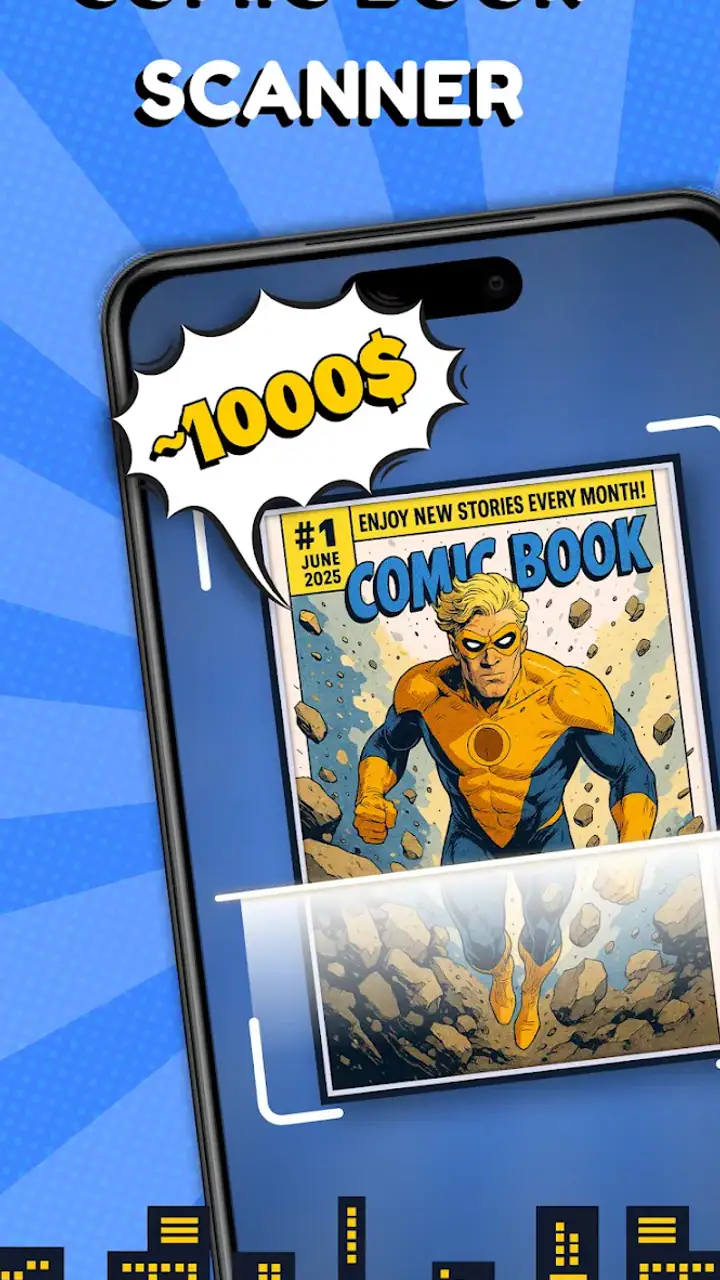
Comic Book Value Scanner is the kind of app I would keep on my phone if I regularly buy comics, sort through inherited collections, or visit second-hand shops. Its purpose is straightforward: use your phone to identify comic books and help you investigate their possible value. That makes it more useful than a simple reading app, but it also means the quality of the result depends heavily on the comic itself, the scan, and how carefully I treat the information it presents.
My overall view is positive, with one important qualification: I see this as a fast research companion rather than a final authority on what a comic is worth. It can make a pile of unfamiliar issues less intimidating and give me a starting point before I compare condition, edition details, and current selling prices elsewhere. For collectors who want quick guidance, that is a meaningful benefit. For anyone expecting an instant, guaranteed appraisal, it is not the right tool.
How Comic Book Value Scanner fits into real collecting
Identifier Studio has built this free comics app around a practical problem. A comic collection can contain similar covers, different printings, reprints, special editions, and issues whose value changes dramatically with condition. Looking up every item manually is slow, especially when I am standing in a shop or working through a box that has not been organized for years. A scanner can reduce that first step to something much more manageable.
The app is listed for Everyone, which matches the approachable nature of the idea. I do not need to be an experienced collector to understand the basic workflow: point the phone at a comic, let the app help identify it, and use the result as a guide to its possible price. The free entry point also makes it easy to test on a small collection before deciding whether it deserves a permanent place in my routine.
What I like most is the way the app changes the question from “What is this?” to “What should I investigate next?” That distinction matters. A comic value tool is most useful when it narrows down an issue and gives me enough context to continue checking it. It is less useful when I treat one displayed figure as a promise that I could sell the comic for that amount.
Related News

Why WhatsApp Messenger Still Makes Everyday Communication Feel Easy

Jurassic World: The Game Is the Better Dino Tycoon for Strategic Players

Threads in Real Life: Who Should Join, Lurk, or Leave

How SHEIN Turned Shopping Into an Endless Content Feed

How to Make Fortnite Feel Smarter on Mobile

Should You Switch to Microsoft Outlook on Mobile?
The scan is most valuable at the sorting stage
I would use the scanner first during collection triage. Imagine finding a long box in a family member’s attic, with comics stacked in no clear order. Instead of opening a browser for every cover, I could scan the issues that look unfamiliar, separate likely duplicates, and create a shortlist of comics worth examining more closely. That saves time even when the final valuation still requires human judgment.
A similar workflow works in a used-book store or comic shop. If I have only a few minutes, I can scan candidates before buying and use the results to decide which issues deserve a closer look. The important habit is to scan before getting emotionally attached to a cover. A familiar character or dramatic image can be appealing without making a particular issue valuable, while an ordinary-looking issue may deserve attention because of its edition or scarcity.
For sellers, the app can also help with the first pass of a listing project. I would not copy an estimated value directly into a sales post, but I could use the identification to find the correct series, issue, and title before writing a description. That reduces one common mistake: listing a comic with an attractive but inaccurate title and then attracting the wrong buyers.
Gallery
Why condition still changes the whole conversation
The biggest practical lesson is that identification and valuation are not the same task. A scanner may help me recognize a comic, but its condition can make a major difference to what a buyer is willing to pay. Creases, spine wear, detached staples, discoloration, writing, missing inserts, water damage, and trimmed edges can all affect the result. Two copies with the same cover may have very different market outcomes.
This is where I would slow down. After scanning, I would inspect the front and back covers under good light, check the spine, look for missing pages, and confirm that the issue number and publication details match the identification. I would also treat a high-looking estimate as a reason to inspect more carefully, not as permission to assume I have found a rare treasure.
That workflow is one of the app’s less obvious strengths. It encourages a useful division of labor: let the phone handle recognition and let the collector handle verification. The app is quick at the first part; a person remains better at noticing damage, restoration, unusual markings, and details that a single cover image may not reveal.
What the experience is good at, and where it slows down
In my experience with this type of tool, the best scans come from a flat comic with the cover fully visible, even lighting, and as little glare as possible. Bagged or boarded comics can be more difficult because plastic reflections interfere with the image. A crowded background can also make the cover harder to read. I would remove distractions, keep the phone parallel to the comic, and retake the image instead of accepting a vague match too quickly.
That extra care is a trade-off. The app promises convenience in the sense that it replaces manual searching with scanning, but it cannot remove the physical problems of photographing a glossy, worn, bent, or bagged cover. If I am working through hundreds of comics, repeatedly adjusting the camera may become tiring. The scanner is still faster than researching every issue from scratch, but it is not a completely hands-off inventory system.
Another useful tip is to scan duplicates separately when their condition differs. It is tempting to identify one copy and assume the same value applies to the rest. That can lead to bad decisions, particularly when one copy is clean and another has heavy spine wear. I would record the identification once, then keep condition notes for each individual copy.
The app’s current version is 1.1, and it works on devices running Android 10 or later. That is worth checking before installing, especially if I am using an older phone as a dedicated collecting device. On a compatible phone, the basic idea is easy to understand, but the usefulness still depends on camera quality, lighting, and the clarity of the comic cover.
How it compares with ordinary alternatives
The usual alternative is a web search. That approach can be more flexible because I can compare multiple sources, read collector discussions, inspect completed sales, and search for details that a cover scanner might overlook. It is also slower and more prone to spelling mistakes, especially when a title has several similar issues or when the cover text is difficult to read.
A spreadsheet is another common option. Spreadsheets are better for organizing a large collection, tracking purchase cost, noting condition, and recording where each comic is stored. They do not identify a comic for me, though, so I still need a separate research process. I see Comic Book Value Scanner as a companion to a spreadsheet rather than a replacement for one.
Printed price guides and specialist catalogues can be valuable for collectors who prefer a deliberate, reference-based approach. They may offer historical context and terminology that a quick scan does not. However, they can be less convenient when I am browsing a shop or sorting a mixed box. The scanner wins on speed and portability; more traditional references win when I need deep verification.
Online marketplaces are especially important when I want to understand what people are actually paying. Asking prices can be optimistic, and a listed comic is not necessarily a sold comic. I would use the app to identify the issue, then compare several relevant sales or listings with similar condition. That two-step method is more reliable than relying on either the scanner or a marketplace search alone.
The meaningful weakness: a result can look more certain than it is
The main limitation is not the idea of scanning; it is the risk of overconfidence. A clean-looking result can make a new collector feel that the identification and value are settled. They are not. Comic pricing is influenced by edition, condition, demand, timing, completeness, and sometimes small details that are easy to miss from the front cover.
I would be particularly cautious with comics that have multiple variants or reprints. A visually similar cover may belong to a different printing, and a broad match may not capture every distinction that matters to collectors. If the result seems unexpectedly valuable, I would verify the indicia, issue number, publication details, and physical condition before making any buying or selling decision.
There is also a practical limitation for people who want a complete digital collection manager. The app’s central appeal is identification and price research, not necessarily long-term cataloguing. If my priority is a detailed inventory with storage locations, purchase dates, condition grades, insurance notes, and sales history, I would still want a dedicated collection database or spreadsheet beside it.
The in-app purchase range runs from $4.99 to $39.99 per item. Because the app is free to start, I can evaluate the basic experience before spending anything. I would still read each purchase screen carefully and decide whether an upgrade genuinely helps my workflow. Someone scanning a handful of family comics may never need to pay, while a serious reseller may consider paid tools worthwhile if they reduce repetitive research.
Small workflows that make it more useful
My preferred workflow would begin with a “discovery” pile. I would scan only enough comics to separate obvious common issues from items that deserve closer attention. Then I would create a second pile for verification, checking condition and edition details before researching market prices. This prevents me from spending the same amount of time on every comic.
For a shop visit, I would prepare a short checklist before opening the app: inspect the cover, scan it without glare, confirm the issue information, and compare the result with the physical condition. If the comic is expensive, I would not rely on a quick scan made while standing in a crowded aisle. The app is most helpful for prioritizing candidates, not for removing the need to think.
For selling, I would use the scan as the beginning of a transparent description. I would name the identified issue, describe visible flaws honestly, and avoid presenting the app’s estimate as a guaranteed selling price. That approach protects both the buyer and me, and it makes the tool useful without exaggerating what it can do.
For inherited collections, I would photograph or note the results in batches and keep uncertain matches separate. The non-obvious advantage here is psychological as much as practical: a large collection becomes a series of small decisions. I can identify, verify, and organize a manageable group instead of feeling that I need to understand every comic immediately.
Who should install it
I think the app is a strong fit for casual collectors, new buyers, estate-sale browsers, and anyone who has recently received a mixed comic collection. It is also useful for experienced collectors who already know how to verify condition but want to speed up the identification stage. The combination of a free starting point and an Everyone rating makes it easy to try without committing to a specialist reference system first.
It is less suitable for someone who wants a guaranteed appraisal, a formal insurance valuation, or a complete professional inventory from one scan. A dealer handling valuable books should use the app as an assistant and then apply established grading and market research practices. Likewise, a reader who only wants to read digital comics will find little reason to choose a value scanner over a dedicated comics-reading service.
The app may also frustrate collectors whose comics are badly damaged, heavily bagged, unusually formatted, or difficult to photograph. In those cases, manual searching may be slower but more dependable. I would also skip it as my only tool if my collection is already carefully catalogued and my main need is advanced records rather than quick recognition.
My final verdict
Comic Book Value Scanner succeeds because it addresses a real early-stage problem: identifying an unfamiliar comic quickly enough to decide what deserves deeper attention. Identifier Studio has made that process approachable, and the app’s 4.7 average from over 900 ratings suggests that many users find the concept useful in practice. It has also passed the ten-thousand-install mark, giving it a reasonable community presence for a focused comics utility.
I would recommend it to anyone who wants a convenient first look at comic books before researching them properly. The best results come from treating it as a sorting and identification aid, then checking condition, edition details, and real market evidence yourself. That extra step is not a flaw in the concept; it is simply the reality of comic collecting.
My clear recommendation is to use it as the first stop, not the final word. If you want to turn a messy box into an organized research list, it can save time and make collecting more approachable. If you need guaranteed valuations or a full collection-management system, choose a more specialized reference or inventory tool instead. For everyday discovery, however, this free comics app earns a place in my toolkit.
FAQs for Comic Book Value Scanner
What is Comic Book Value Scanner and how does it work?
Comic Book Value Scanner is an app designed to help comic book enthusiasts determine the value of their comics. Using your phone's camera, the app scans the barcode or cover of a comic and provides current market value, trends, and historical data. It's a must-have tool for collectors looking to buy, sell, or simply manage their collection.
Is Comic Book Value Scanner available for both Android and iOS devices?
Yes, Comic Book Value Scanner is available for download on both Android and iOS platforms. Users can find it on the Google Play Store for Android devices and the Apple App Store for iOS devices. This ensures that comic collectors using different devices can access the app's valuable features seamlessly.
Does Comic Book Value Scanner offer any in-app purchases or subscriptions?
The app offers both free and premium features. While the basic scanning and valuation services are free, users can opt for a subscription to unlock additional features such as advanced market analysis, personalized alerts, and ad-free browsing. This allows users to choose the level of service that best fits their collecting needs.
How accurate are the comic valuations provided by the app?
The valuations in Comic Book Value Scanner are based on a comprehensive database and real-time market data, offering a high level of accuracy. However, prices can fluctuate, and the app provides estimates based on current trends. For precise valuations, especially for rare issues, additional professional appraisal might be recommended.
Can Comic Book Value Scanner handle international comic books?
Yes, the app supports a wide range of international comic books. Users can scan comics from various countries and receive valuations in their local currency. This feature is particularly beneficial for collectors with diverse collections, ensuring they have access to accurate pricing information across different markets.
Pros
- Accurate valuation data for comic books.
- User-friendly interface and easy navigation.
- Regular updates with the latest comic prices.
- Offline mode for scanning without internet.
- Supports multiple languages for global users.
Cons
- Limited database for rare comic editions.
- Requires in-app purchases for full features.
- Occasional bugs in the scanning function.
- High battery consumption during extended use.
- Ads can be intrusive in the free version.


